
Warmer winters are reshaping the Rideau Canal and putting one of its most vulnerable residents at risk.


-15%20(1)%20Large.jpeg)
Hear from Dr. Salma Sabour
Beneath the surface of the historic Rideau Canal, Northern Map Turtles rely on a thick, stable layer of ice to survive months of winter hibernation. As climate change destabilizes the ice cover, these turtles become increasingly vulnerable to predators that can reach them more easily.
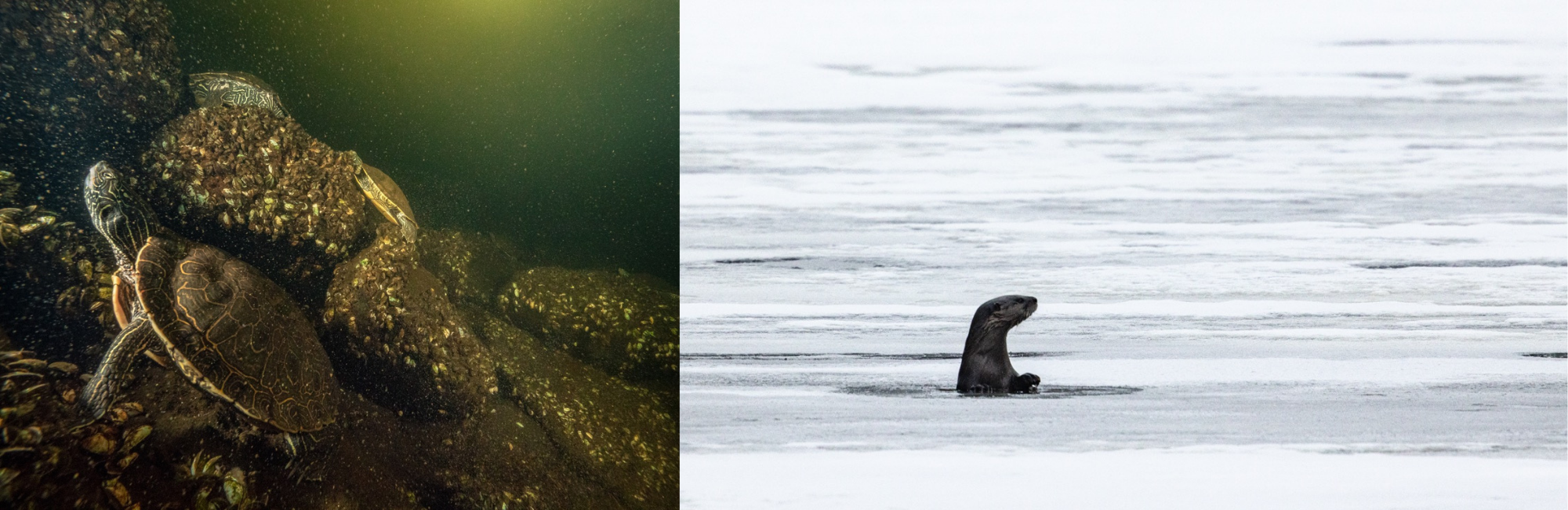
National Geographic recently published a story highlighting the growing risks to this species and the efforts underway to understand and protect them, including the collaboration between our custodian Cass Stabler of Parks Canada and scientist Dr. Grégory Bulté.
.png)
In addition to the work featured in the article, Stabler and her partner in the Preserving Legacies cohort program, Susan Millar, recently convened a locally led climate risk assessment and adaptation planning workshop. Building on months of stakeholder engagement, archival research, and climate data analysis, the event brought together a diverse cross-section of participants — from lock operators to policymakers — to explore the full range of values the Rideau Canal holds and the climate risks it faces.
.png)
Stretching 202 kilometers (126 miles) from Ottawa to Lake Ontario, the Rideau Canal is recognized as a UNESCO World Heritage Site for its remarkable system of locks, dams, bridges, and fortifications. But beyond its engineering legacy, the canal is also a living landscape where cultural and natural heritage intersect.
.png)
Through the Preserving Legacies approach, undertaking a locally led, values-based risk assessment and adaptation plan helps ensure that institutional values, like UNESCO's Outstanding Universal Value (OUV), are considered alongside locally significant values. In the Rideau Canal's case, that includes nature and biodiversity like this unique turtle species.
For custodians on their adaptation journey, the takeaway is clear: climate impacts often extend beyond what is most visible or officially recognized. By embracing a plural knowledge systems approach to stakeholder engagement, risk assessment, and adaptation planning, custodians can help elevate locally meaningful values at risk—leading to more holistic, resilient solutions.
Susan Kamenar is a strategic marketing and communications executive with over 15 years of experience driving innovation in storytelling and audience engagement for world-renowned cultural organizations, including National Geographic, the Smithsonian, Live Nation, and Sony Music. Her award-winning track record of community-centric campaigns cuts through the crowded media landscape to inspire action around important causes like environmental stewardship, STEAM education, and social justice. Committed to cultivating the next generation of changemakers, she manages high-impact teams and has served as a guest lecturer at the College of Charleston (her alma mater) and Georgetown University. Based in Denver, CO, Susan enjoys sharing her passion for nature, sustainability, and cultural heritage by teaching yoga and guiding outdoor adventures throughout the region’s National Parks and Monuments. When not working, you can find her hiking, camping, and standup paddleboarding with her 10-lb adventure pup.
Michael Snyder is a photographer, filmmaker, and educator exploring the dynamic relationship between environmental and cultural change. As Media and Communications Director, he is responsible for overseeing our visual storytelling and public engagement goals. An environmental and climate scientist by training, Snyder uses his combined knowledge of visual storytelling and conservation to create narratives that drive social impact. His work has been featured by outlets such as National Geographic, The Guardian, and The Washington Post. He's been honored by awards such as the Portrait of Humanity Award, the Decade of Change Award, The Welcome Prize for Photography, and the LensCulture Portrait Awards. Snyder is a Pulitzer Grantee, a member of the Society of Environmental Journalists, and an Assistant Professor of Visual Communication at Syracuse University's Newhouse School in New York. In 2021 he was a featured speaker at the United Nations Climate Conference. In 2022, the University of Edinburgh named him one of its most “influential alumni making a significant contribution to climate science and justice.”