
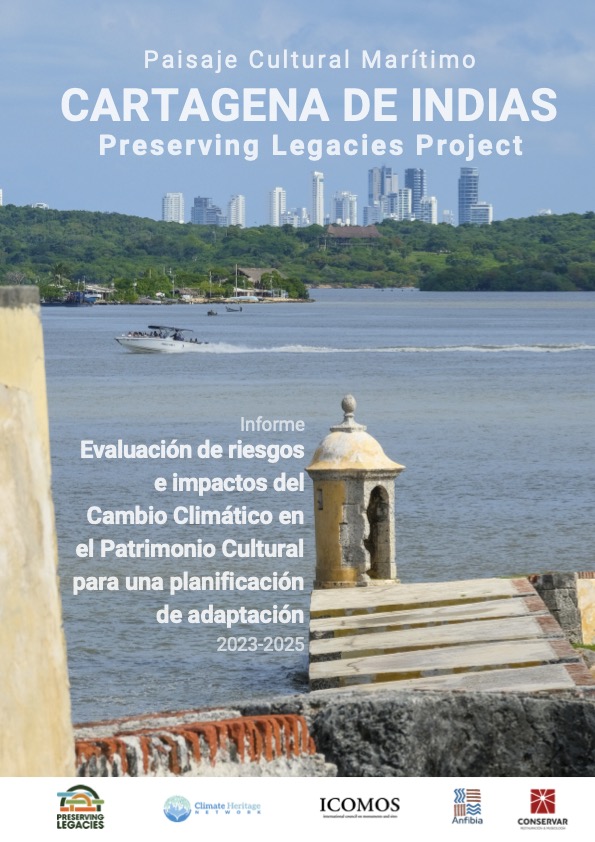
Evaluación de riesgos e impactos del cambio climático en el patrimonio cultural para una planificación de adaptación - paisaje cultural marítimo de Cartagena de Indias, Colombia
How to cite this publication
APA Style
Lossio Chávez, F. (2022). Tourism and Nation Branding: Trends and Digital Strategies: Art, Culture and New Technologies in Latin America and the Caribbean. https://doi.org/10.18235/0004301
Chicago Style
Lossio Chávez, F. (2022). Tourism and Nation Branding: Trends and Digital Strategies: Art, Culture and New Technologies in Latin America and the Caribbean. https://doi.org/10.18235/0004301

This locally led climate risk and adaptation assessment for the Maritime Cultural Landscape of Cartagena de Indias extended the geography of heritage at risk beyond its fortified World Heritage core to include community-valued places and practices, such as beaches, mangroves, coral reefs, underwater cultural heritage, maritime cultures and livelihoods, and Afro-descendant and Indigenous relationships with the sea. It found a maritime cultural landscape already under considerable climate risk with all but two of the 24 sites assessed experiencing medium or high impacts. Heat waves, extreme rainfall, storm intensification, coastal flooding, and coastal erosion emerged as principal hazards, interacting differently with the exposure and vulnerability of each place. Bringing locally held values into the assessment alongside Outstanding Universal Value widened the evidence base and confronted an enduring inequality: who has the authority to define what matters, whose knowledge informs climate decisions, and which heritage receives protection first.
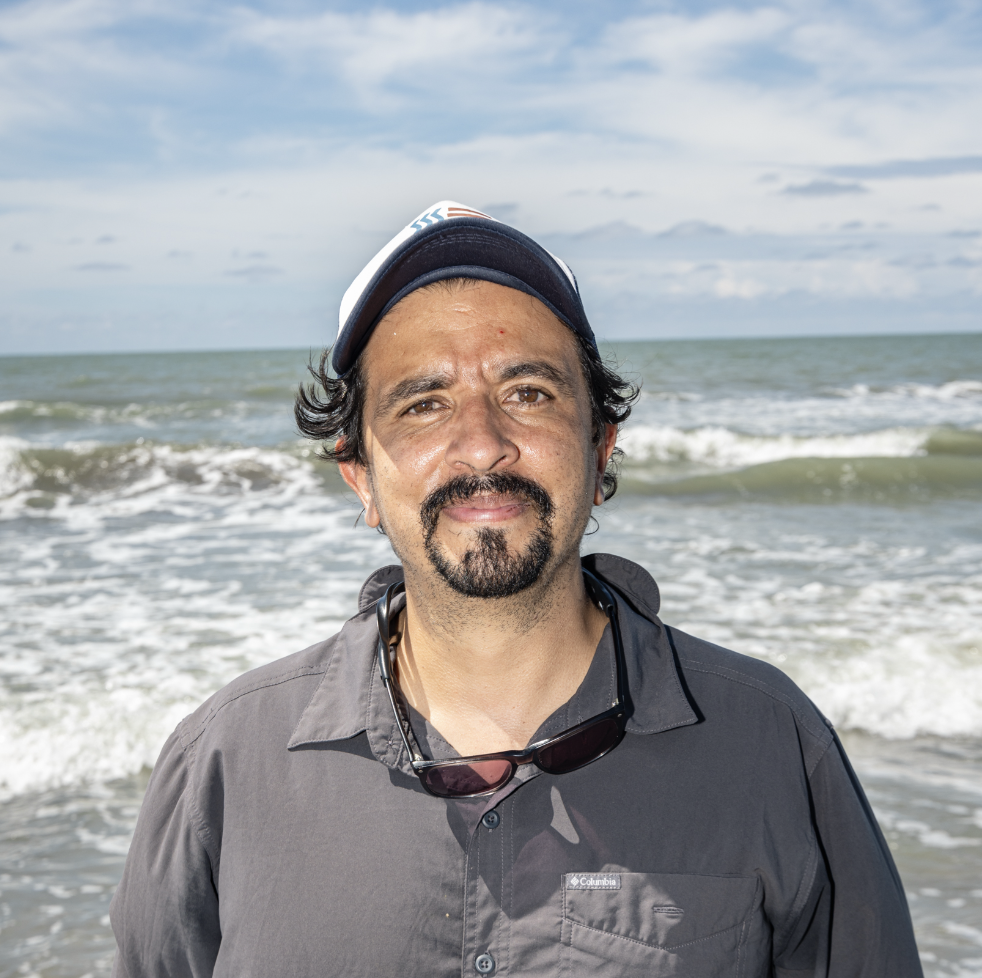
Carlos del Cairo H., Gabriela Caro León

Fundación Colombia Anfibia, Preserving Legacies, ICOMOS, Climate Heritage Network
Overview
Guided by Preserving Legacies custodians, Carlos del Cairo and Gabriela Caro León, this locally led, forward-looking, and values-based climate risk and adaptation assessment was developed through a two-year participatory process that explored:
- What communities value
- Where and how climate impacts are unfolding
- The relationships among hazards, exposure, vulnerability, and responses
- Future conditions
- Adaptation priorities
Across the Historic Centre, Tierra Bomba, Bocachica, and the Rosario Islands, it extended the geography of heritage at risk beyond the fortified World Heritage core and traced the connections among historical, aesthetic, social, spiritual, economic, and ecological values.
Through its development, it shows how a locally led assessment can connect scientific evidence with plural knowledge, reveal both environmental risk and structural inequality, and guide adaptation across interconnected cultural and ecological systems. Here, risk assessment takes the form of collective stewardship, sharing knowledge and authority to sustain the relationships among people, place, identity, climate justice, and wellbeing.
Methodology & Tools
This locally led process strengthened collaboration among communities, institutions, and scientists while giving stakeholders and rights holders greater agency over decisions affecting their heritage and futures.
Participatory tools supported distinct stages sof the process. For example:
In Bocachica, the Circle of Emotions connected heritage places and practices with memory, feeling, meaning, and significance, producing a community-defined geography of values. These early conversations allowed local stakeholders and rights holders to shape the scope of the assessment by identifying the places, practices, attributes, and relationships that mattered to them.
A Climate Change Bingo game, adapted from the Colombian tradition of Lotería, created an accessible shared language for exploring present conditions, climate-related hazards, current and future impacts, resilient actions, and adaptation options. Its playful structure opened scientific complexity to collective reflection while generating contextual information about risk and vulnerability.
Lastly, a community-informed climate-risk booklet, enriched with QR-linked testimonies, carried these perspectives across Cartagena’s connected coastal landscapes and beyond the workshop room. It supposed a six-day, field-based workshop across 24 sites in November 2024. Travelling on foot and by boat, stakeholders and rights holders examined mangroves, coral reefs, fortifications, underwater cultural heritage, working waterfronts, beaches, and everyday community spaces. The booklet served as a field instrument throughout the journey, enabling them to record heritage attributes and values together with evidence of hazards, exposure, vulnerability, impacts, and existing responses at each location. Observation in place brought scientific, local, and Indigenous knowledge into dialogue with historical records, lived experience, memory, and emotion.
A collaboratively developed threat matrix and risk questionnaire organized this evidence, while future scenarios for 2040 and 2060 supported a structured examination of uncertainty and changing climate conditions.
The Results
The findings revealed a maritime cultural landscape already under considerable climate risk. All but two of the 24 sites were assessed as experiencing medium or high impacts.
Heat waves, extreme rainfall and storm intensification, coastal flooding, and coastal erosion emerged as principal hazards, interacting differently with the exposure and vulnerability of each place.
Holistically, the region is projected to experience warmer temperatures year-round, with potentially drier conditions, especially during traditionally wet periods. Additionally, when taking into account both global sea level rise and local subsidence, the total sea level rise could reach 34.3 cm by 2050 and a staggering 98.5 cm by 2100, posing serious risks to the region’s coastal infrastructure, ecosystems and communities.
The assessment examined the consequences of these interactions through potential loss, damage, disturbance, displacement, transition, fragmentation, and decontextualisation. It also showed that risk is spatially uneven, shaped by environmental change alongside socioeconomic conditions, governance decisions, institutional capacity, and unequal access to climate responses.
Resilience & Adaptation
Alongside vulnerability, the process documented existing resilience and adaptive capacity: long-term community observation, traditional fishing knowledge, local monitoring, mangrove planting, coral restoration, resistance in defence of territories and livelihoods, and sustained practices of care.
These capacities informed proposed adaptation pathways for Tierra Bomba and the Rosario Islands, including coral nurseries, mangrove nurseries and planting, the restoration of ancestral vegetation, green corridors, climate literacy, and community-based monitoring. Further proposals addressed the documentation of heritage at risk, underwater preservation, sustainable fishing and agriculture, and the inclusion of cultural heritage in territorial planning.
Significance
As described by custodians Carlos del Cairo and Gabriela Caro León, "The importance of this report lies in its collaborative approach. It is the result of a participatory process in which local communities, academics, and scientists worked together to better understand the impacts of climate change on the cultural and natural heritage of Cartagena.
It does not separate people from nature but rather recognizes that everything is interconnected. The sea, the winds, the waves, biodiversity, the fortifications, and the communities that inhabit and care for this territory are all part of the same system. The report integrates different forms of knowledge, weaving together scientific evidence with local knowledge, life experiences, and community voices.
One of its most important contributions is making visible the voices that have historically been marginalized, especially those of Black and Indigenous communities. In this way, it sought to center community knowledge, experiences, and ways of relating to the territory in order to understand and respond to climate change.
Among the main findings are threats such as rising temperatures, sea level rise, coastal erosion, loss of vegetation cover, the fragmentation of ties between community and territory, tidal variations, the intensification of hurricanes, and other effects associated with climate change. However, one of the most significant messages is the resilience of the communities. Through their songs, adaptive cultural practices, traditional knowledge, and stewardship of biodiversity, communities continue to drive local initiatives that strengthen adaptation and the protection of cultural and natural heritage."
Continue reading
%20cover.png)