
Hear from Dr. Salma Sabour
Heritage Adapts! launched globally on June 4th as the first campaign uniting the heritage sector behind a shared mission: supporting at least 3,000 sites and practices to take locally led climate adaptation action by 2030. Since then, the Founding Coalition has elevated the campaign onto the world stage — from the historic Roman Odeon in Jordan to "Road to COP" events in Turkey and Germany — raising awareness and securing commitments along the way. Here are the highlights:
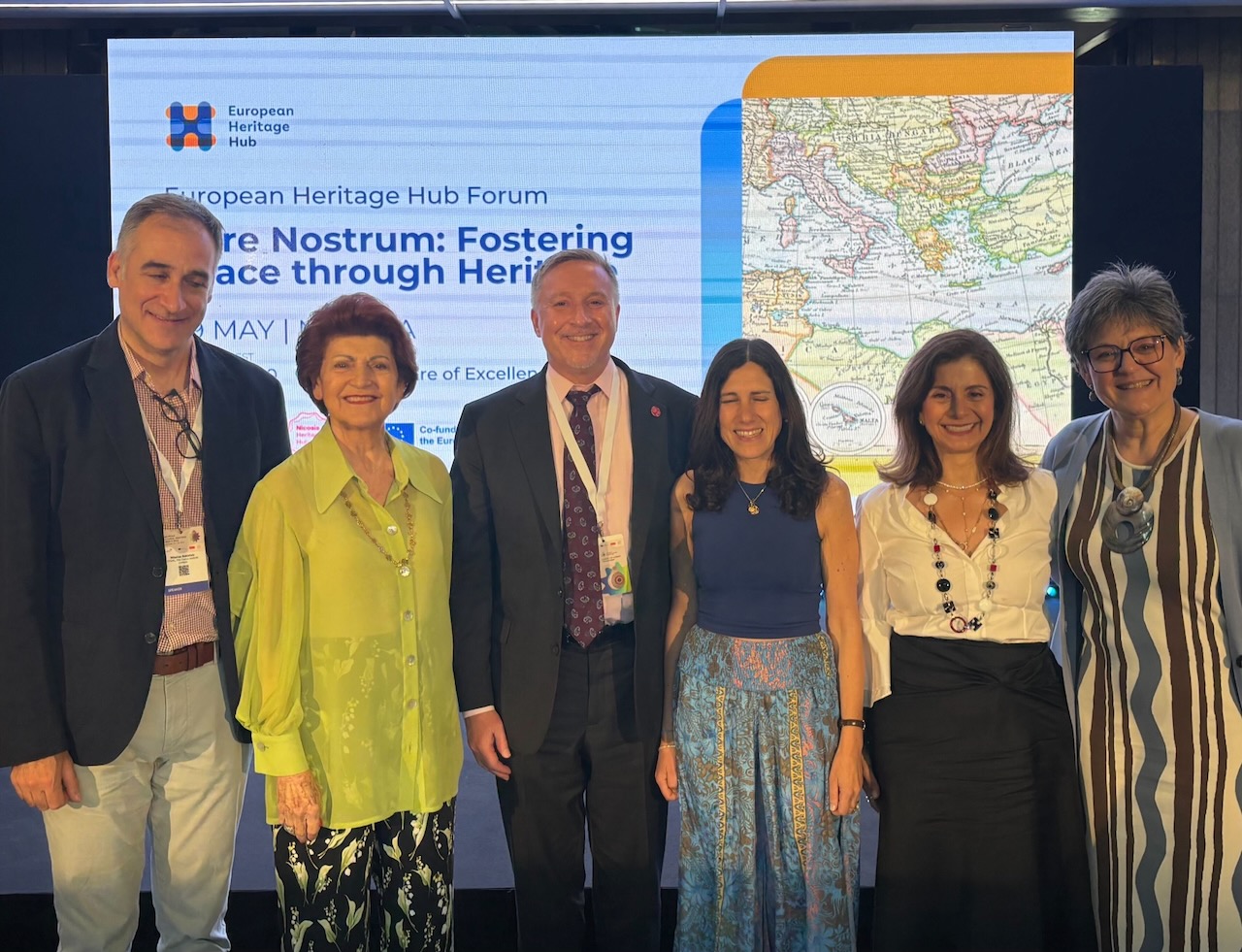
Nicosia, Cyprus: Previewing Heritage Adapts! at Europa Nostra’s General Assembly
Six months before the U.N.’s Climate Conference, COP31, arrives at Türkiye’s Mediterranean shores, heritage voices from across the region — including Preserving Legacies’ Director of Policy, Andrew Potts — gathered at Europa Nostra’s General Assembly and its European Heritage Policy Agora to share stories and build narratives for bringing locally-led, culture-based climate action to the heart of climate policy making. The concept of “Mare Nostrum” was central to this years’ efforts. While it refers to the Mediterranean Sea or “our sea”, it was made clear that the importance of this sea is not just as a shared body of water, but also shared history, culture, and challenges — including shared fossil fuel dependencies, climate change impacts, and conflict risks.
Previewing Heritage Adapts!, Potts reinforced how adapting heritage can be a solution for a just transition and building local resilience to climate change across the Mediterranean and beyond.
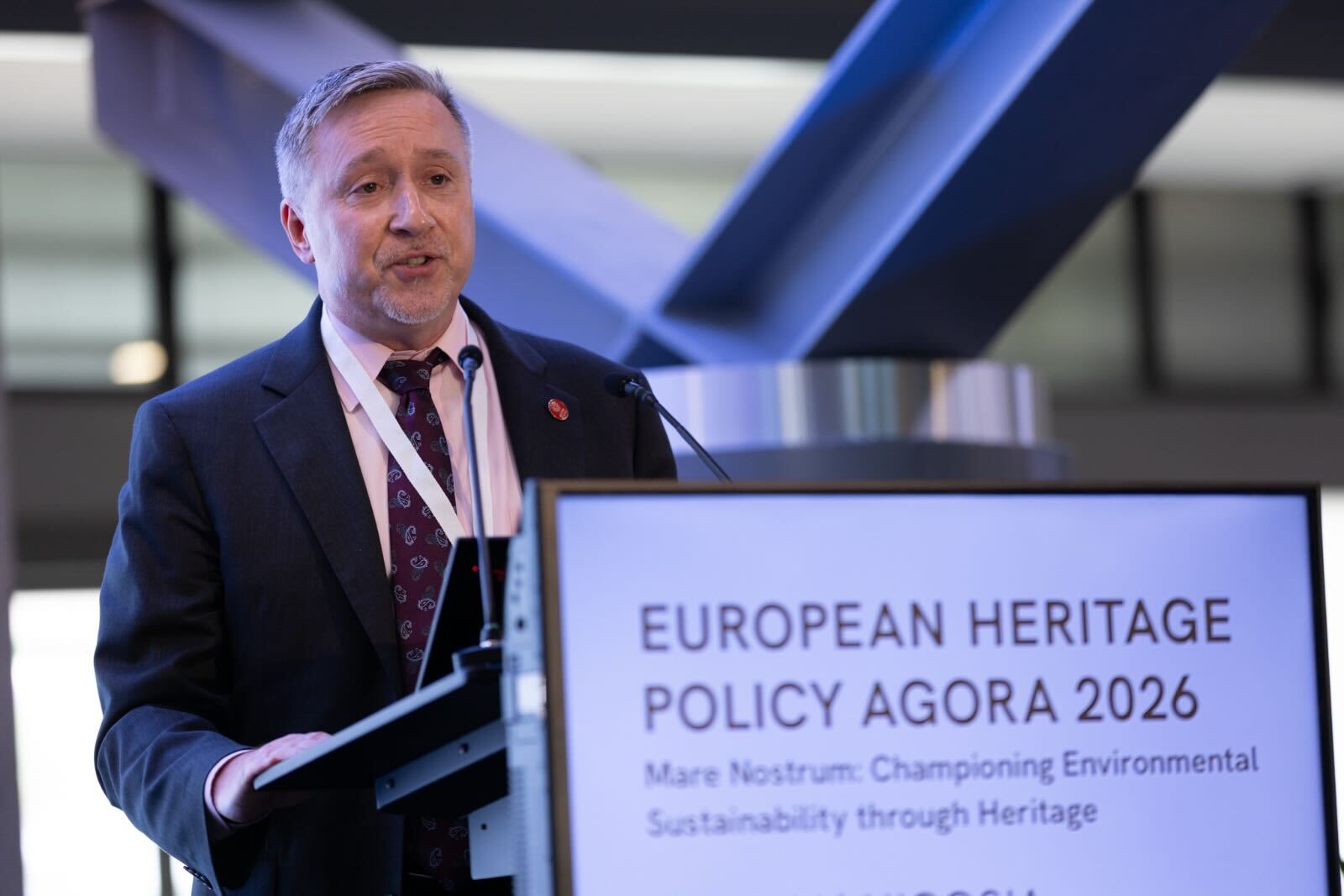
Photo by Josef Rabara / Europa Nostra
Amman, Jordan: Petra National Trust’s Heritage Awards & the Launch of Heritage Adapts!
The official launch of Heritage Adapts! coincided with the Petra National Trust (PNT) Heritage Awards in Amman, Jordan where Preserving Legacies, represented by Potts, was honored to attend. This annual event recognizes, celebrates, and supports outstanding cultural heritage preservation and promotion efforts across Jordan, Palestine, and Syria. The event was hosted by HRH Princess Dana Firas, President of the Petra National Trust and Chair of the International National Trust Organization, both Heritage Adapts! supporting partners. Together with Potts and Europa Nostra General Counsel Sneška Quaedvlieg-Mihailović, they championed putting heritage at the heart of climate action, underscoring that heritage is not only about preservation, but a force for peacebuilding, sustainability, and resilience.
Istanbul, Türkiye: Heritage Adapts! on the Global Stage at Zero Waste Forum
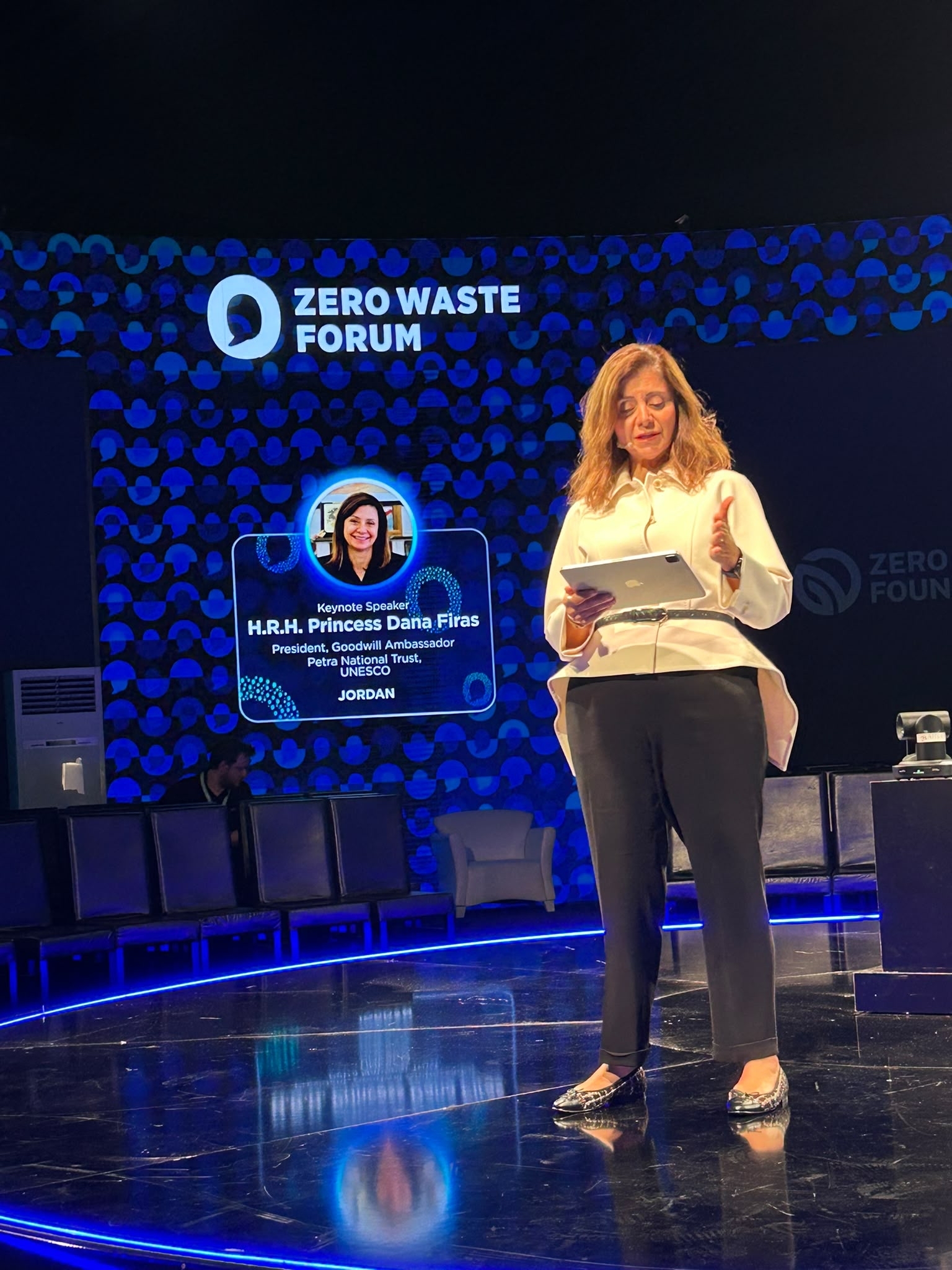
From Amman, the spotlight moved to Istanbul, where HRH Princess Dana Firas put Heritage Adapts! before a global audience at the Zero Waste Forum — one of the premier events on the road to COP31, attended by representatives from 183 countries. She underscored how Heritage Adapts! offers real, proven solutions to the climate crisis and emphasized the power of community-led solutions grounded in knowledge and learning that have been tested and refined over generations. Dr. Ege Yıldırım of ICOMOS Türkiye also represented the campaign at the Forum.
Antalya, Türkiye: Building the Host Region's Case for Heritage in Climate Action
In November, Antalya, Türkiye will host COP31, the annual UN Climate Conference. On June 9, a standing-room-only crowd of the city's culture and heritage leaders gathered at Antalya Bilim University to share their visions for culture-based climate action ahead of the summit. Potts presented Heritage Adapts! to the room, explaining that adaptation and adaptation finance will be central issues on the COP31 agenda, and urged Antalya's heritage community to use the campaign as a platform to showcase their own work — by pledging to adapt the region's many heritage sites and endorsing the campaign ahead of November. The event was made possible by ICOMOS Türkiye and Europa Nostra Türkiye, with thanks also to leadership partners, ICOMOS, and its Climate Action Working Group, and IFLA.
Bonn, Germany: Centering Heritage in the U.N.'s Climate Framework
From Istanbul, the campaign's advocacy moved to Bonn, Germany, for the U.N.'s June climate meetings (SB64). Heritage Adapts! is one of 120 “Plans to Accelerate Solutions” under the Global Climate Action Agenda and during week one, Ave Paulus of ICOMOS and Claire McGuire of IFLA had the opportunity to represent Heritage Adapts! as Founding Partners at a Global Action Agenda Axis 5 Roundtable on Human & Social Development. They reinforced how the campaign provides connection and capacity building for heritage stewards around the world, as well as unparalleled access to global expertise on culture and climate. They closed with a call for culture to remain prioritised in Axis 5, while linking culture and heritage to concrete actions that drive transformation across the priority themes of the COP31 Türkiye presidency.
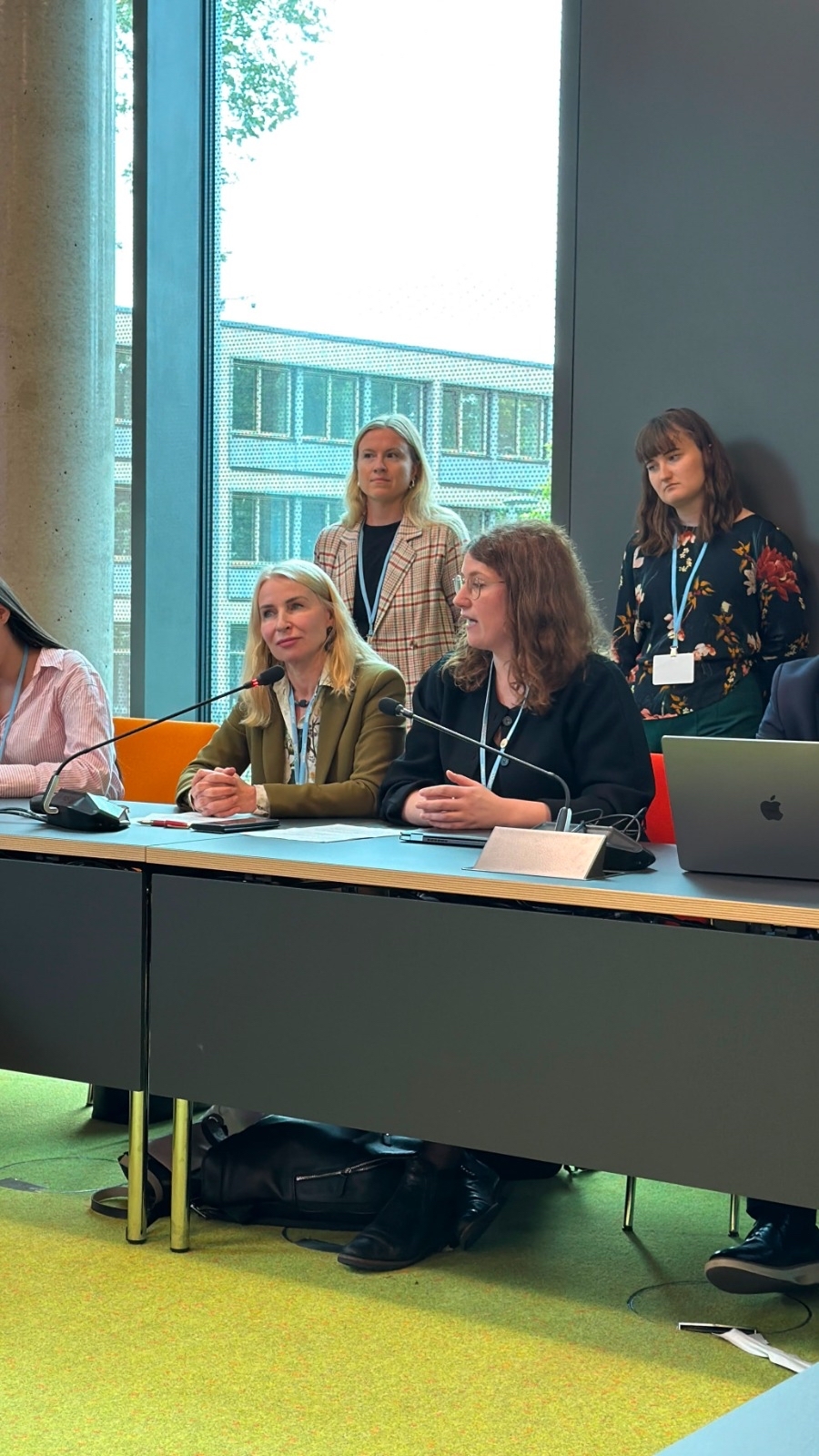
As SB64 rolled into its second week, Potts, Anne Pirard (Preserving Legacies climate custodian for the Great Spa Town of Spa, Belgium), and Darius S. Ankamah (a Founding Steward of Heritage Adapts!) spotlighted how Heritage Adapts! is pushing forward on every front to scale adaptation for culture and heritage. They joined German colleagues for a side event on how Heritage Adapts! can support both the UN’s Global Goal on Adaptation (GGA) cultural‑heritage target and Germany's pioneering new goal to adapt its World Heritage sites by 2030.
- Potts presented the Heritage Adapts! Pledge and Community of Action, underscoring that as the world heads toward a 1.5°C overshoot, we must scale adaptation for cultural heritage now.
- Ankamah outlined how the GGA negotiations at SB64 will shape COP31, opening new opportunities to support culture‑based climate action and measure progress.
- Pirard grounded the discussion in lived practice — emphasizing stakeholder‑driven adaptation and framing adaptation action for heritage as a matter of intergenerational equity.
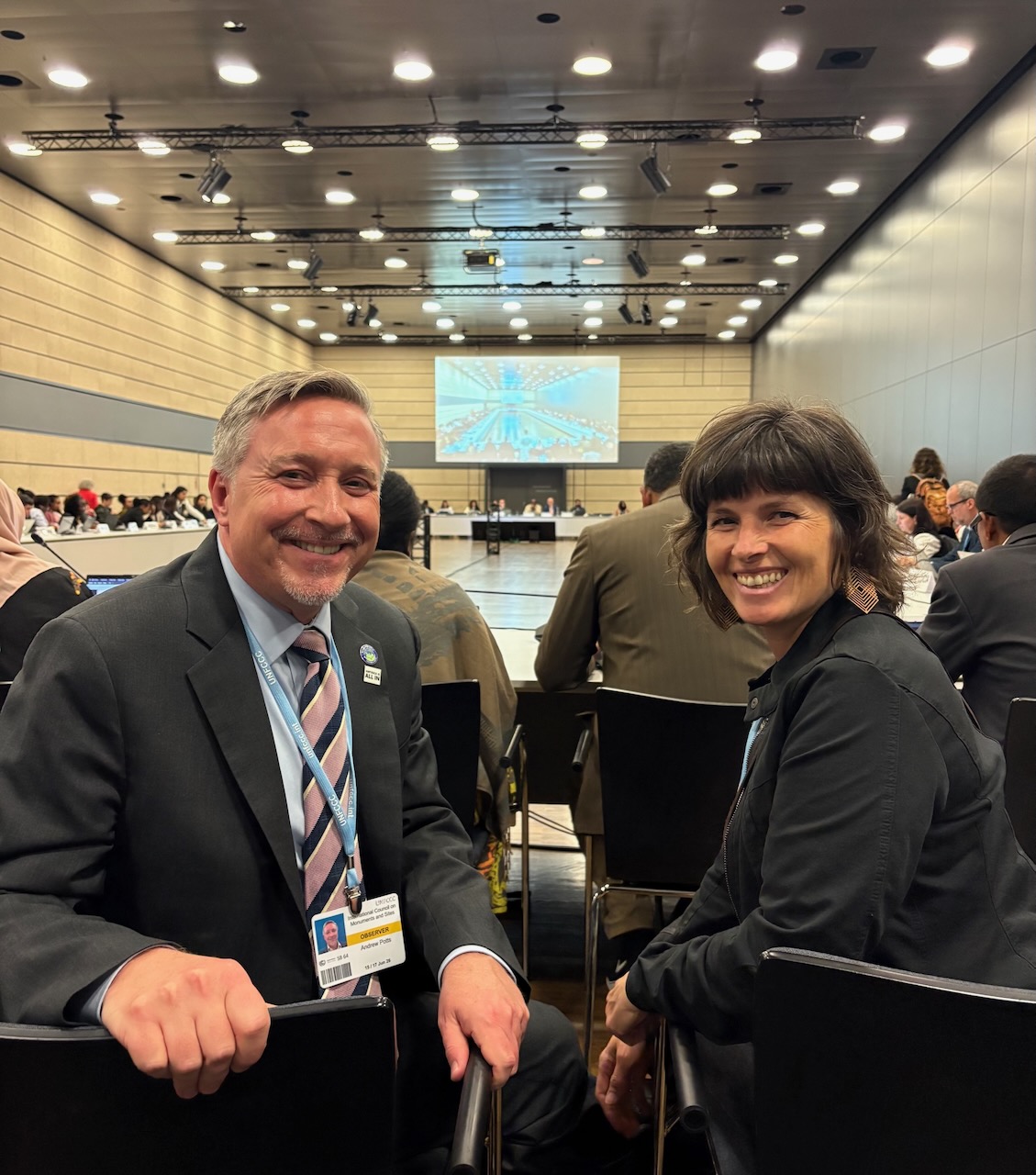
Potts and Pirard, on behalf of the Heritage Adapts to Climate Alliance (HAPi), also joined the negotiations on the draft text for the Global Goal on Adaptation (GGA). This text — covering the Belém Adaptation Indicators, the Baku Adaptation Road Map, and the modalities for future technical work — will shape how countries plan, track, and finance adaptation for years to come. Their presence ensured that heritage perspectives were heard directly by negotiators, reinforcing that cultural heritage must be reflected in the systems that guide adaptation planning, reporting, and finance. To learn more about these issues, join the HAPi discussion board on the Heritage Adapts! online community platform.
A sincere thank you to IFLA, ICOMOS, Climate Heritage Network, ICOMOS Germany, the German Environmental Foundation (DBU), the Deutsche Stiftung Denkmalschutz, and all the members of the Heritage Adapts! coalition supporting this work.
The momentum from SB64 to COP31 is real — and Heritage Adapts! will be there at every step of the way advocating for heritage stewards and the support they need to take locally led adaptation action by 2030.
Berlin, Germany: A New Push to Adapt Germany's Heritage — And Heritage Adapts! is there to Help
Potts then traveled to Berlin, where Germany's heritage and climate-adaptation communities gathered at the iconic James Simon Galerie for a powerful two‑day event on “Welterbe im Klimawandel” — a national gathering designed to accelerate collaboration between adaptation experts, World Heritage site managers, researchers, and public authorities. At the heart of the meeting was Germany’s new Ü‑4 goal to create a national framework, indicators, and measures so that all German UNESCO World Heritage Sites and UNESCO Global Geoparks can develop climate‑mitigation and adaptation plans by 2030. As part of their national climate adaptation strategy, it is an ambitious, forward‑looking commitment — and exactly the kind of national leadership the global climate‑heritage movement needs.
Potts presented Heritage Adapts! as a way to connect that effort to Target 9(g) of the Global Goal on Adaptation and give German stewards practical tools, data, and a global peer network. He also pointed to Germany, alongside Antigua and Barbuda, Brazil, Greece, and Ireland, as nations with new or updated national adaptation objectives for cultural heritage, and how their leadership and collaboration with Heritage Adapts! can be a model for the kind of national partnerships that can accelerate climate action.
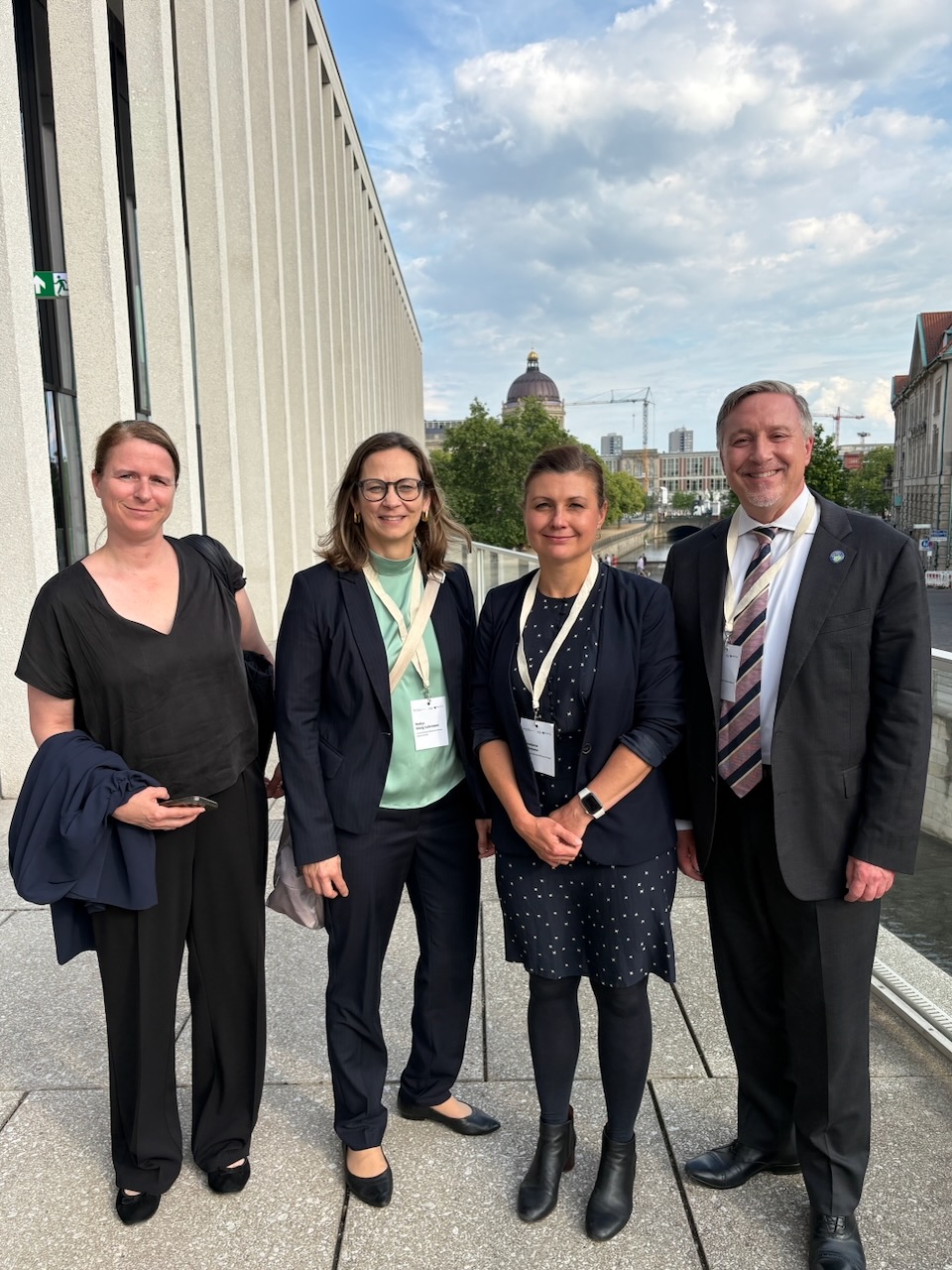
Congratulations to organizers Prussian Cultural Heritage Foundation, German Federal Environmental Foundation, and the Federal Ministry for the Environment, Nature Conservation, Climate Protection and Nuclear Safety and to all the speakers and participants — including Dr. Johanna Leissner of the Fraunhofer Institut, a Heritage Adapts! supporting partner, also presented on Friday, placing adaptation for cultural heritage in a broader European context — who made this event such a milestone. The work ahead is monumental, but the momentum is real, and Heritage Adapts! is here to help.
The Global Throughline
No matter the space or the audience, one consistent message rang true: heritage belongs at the center of climate policy and planning and Heritage Adapts! is a mechanism to do just that. With COP31 just months away, the campaign's coalition of partners, stewards, and advocates is only picking up momentum and every member has a role to play in scaling adaptation for heritage sites and cultural practices — locally, nationally, and internationally.


-80%20(2).jpg)
-880.jpg)


%20(Blog%20Banner).jpg)
-340.jpg)
-15%20(1)%20Large.jpeg)
-380.jpg)
![[Media Statement] COP30 makes clear: culture and heritage are central to climate adaptation planning, policy and finance](https://cdn.prod.website-files.com/64405ecf1f787733599fccda/691f89944dfb5c6709af8027_IMG_4862%20(1).jpeg)

-397.jpeg)
.jpeg)
-25.jpeg)
-64%20(2).jpg)
-131.jpeg)


-286.jpg)


%20(Blog%20Banner).jpg)


-323.jpg)
-31.jpg)